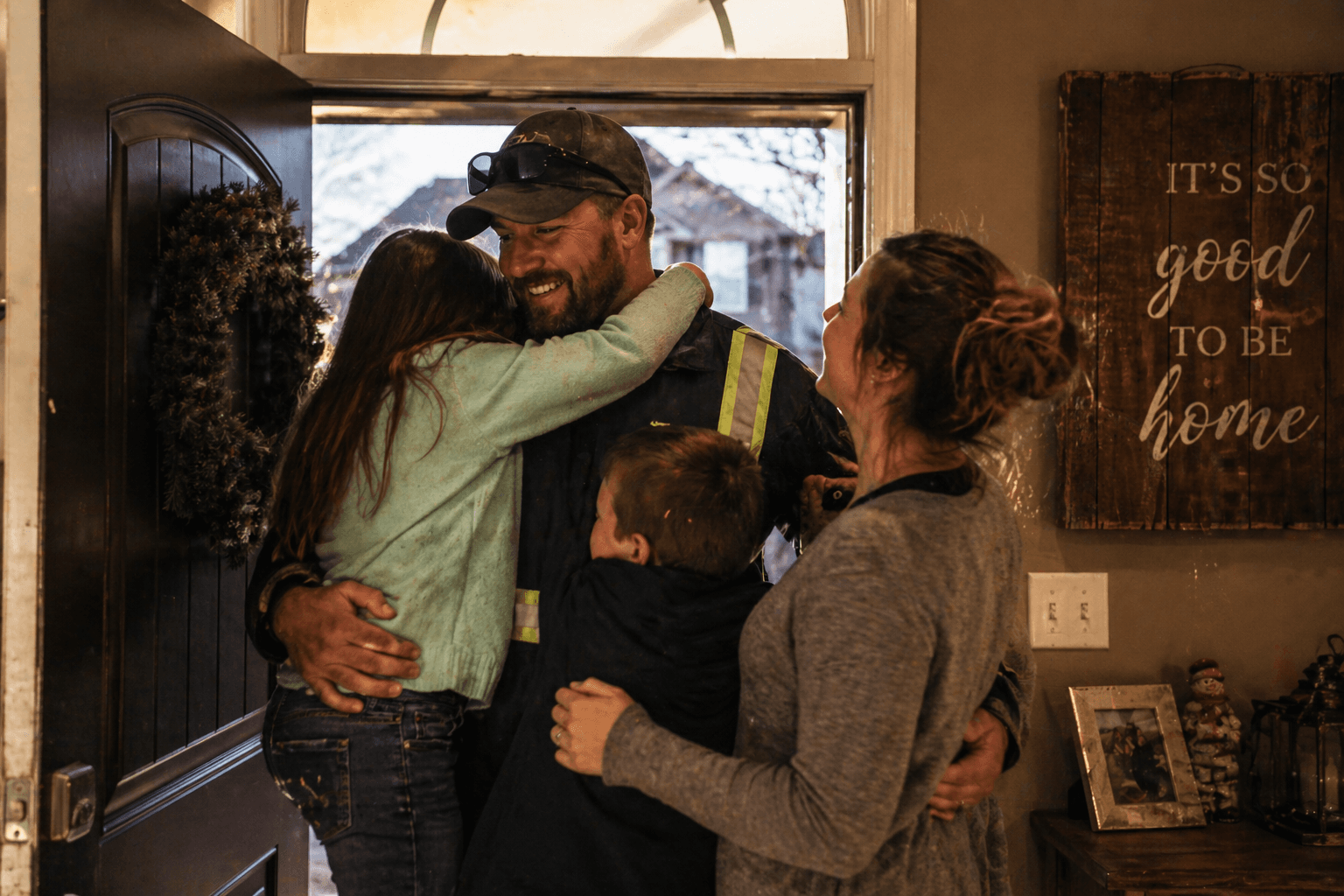
After 14 days in camp, the moment you should feel most relief — stepping through your front door — is often when rotation workers feel most disoriented.
The Reintegration Gap Nobody Talks About
Research on FIFO (fly-in, fly-out) workers consistently identifies the first 24–72 hours at home as one of the most psychologically complex periods of the rotation cycle. Workers have been in "production mode" for two weeks. Partners have built routines without them. Kids have changed in small but real ways. Everyone has adapted — and now the family needs to adapt again.
This isn't a failure. It's a predictable pattern. And it can be managed if you know it's coming.
What Coming Home Mode Does
ShiftBuddy's Coming Home Mode activates 48 hours before your rotation ends. It doesn't wait until you're standing at baggage claim wondering why you feel like a stranger in your own life.
For the worker, it offers gentle prompts: What's one thing you want to do in the first hour? What do you need from your partner to feel settled? Conversation starters that don't require you to have the right words ready after two weeks of 12-hour shifts.
For the partner, it offers their own parallel prompts. Because they've been managing everything alone and they have things they need to say too. The app doesn't tell them what to feel — it just opens the door.
The Reintegration Checklist
Optional, not preachy. But workers who use it report that having a simple framework — decompress time, first family activity, agreement to not make big decisions in the first 24 hours — takes the pressure off both sides.
The goal isn't perfection. It's just a better first 24 hours.

